Quick answer: Emotional eating without dieting doesn’t mean eliminating it, it means understanding it. Emotional eating is a completely normal way to cope, and everyone does it sometimes! It’s only worth a closer look if it’s become your main way of dealing with hard emotions, or if it’s tipping into a binge (which is usually a sign of restriction, not a lack of willpower). The first step isn’t quitting.. it’s noticing your patterns.
Is Emotional Eating Actually Bad?
Quick answer: No! Emotional eating is completely normal, and diet culture has demonized something that’s actually a natural part of being human.
I talk with people about emotional eating and emotional binge eating all the time. What they describe is exactly what I’ve experienced myself, turning to food to deal with a certain emotion or situation, and then feeling totally out of control with that food in the moment.
I used to get so focused on trying to completely quit eating emotionally, or quit bingeing altogether. Guess what? It never worked!
Here’s the thing: eating emotionally is completely normal. Everyone does it every now and then. Diet culture has demonized the act of eating to comfort ourselves, but it’s actually pretty natural. Food is meant to bring us satisfaction, and satisfaction and comfort go hand in hand! So don’t beat yourself up for emotional eating.
(Side note: if emotional eating often turns into a full binge for you, you’re very likely restricting that food somewhere else.. which changes the picture a bit. I go deep on that connection in Why Do I Binge Eat at Night? if that sounds familiar.)
When Emotional Eating Is Worth a Closer Look
Quick answer: If emotional eating has become your main way of dealing with uncomfortable emotions, and it’s having a real negative impact on your life, it’s worth exploring other ways to cope. Not because emotional eating is “bad,” but because you deserve more than one tool.
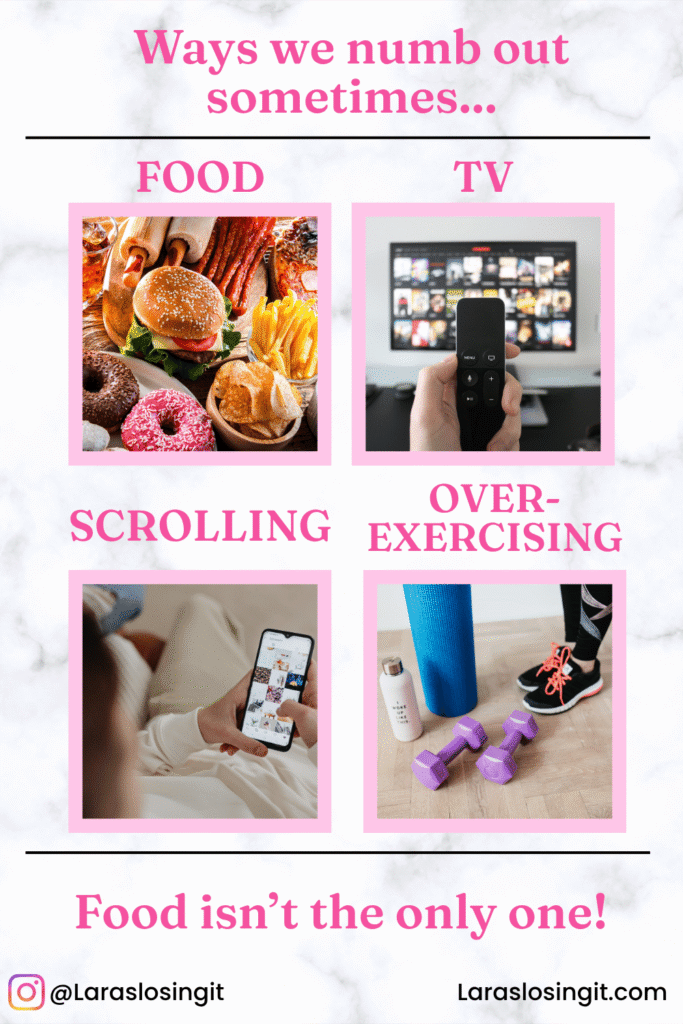
It’s also important to actually feel some of these emotions and process them, that’s part of the human experience!! If you’re mainly numbing feelings out, whether with food or with other things like TV, mindless scrolling, or even exercise, that’s not going to help you long term either. Food isn’t the only numbing tool out there, and it’s not uniquely villain-coded compared to the rest of them.
Emotional Eating vs. Emotional Binge Eating
Emotional eating and emotional binge eating aren’t the same thing, and it’s worth knowing the difference.
Emotional eating is reaching for food to cope with a feeling, stress, sadness, boredom, loneliness. It’s normal, and on its own it isn’t a problem to fix.
Emotional binge eating is when that turns into feeling completely out of control with food in the moment, like you couldn’t stop even if you wanted to. That loss-of-control feeling is usually less about the emotion itself and more about restriction happening somewhere else in your eating. If that’s the pattern you’re in, Why Do I Binge Eat at Night breaks down exactly why that happens and what helps.
How to Actually Notice Your Patterns
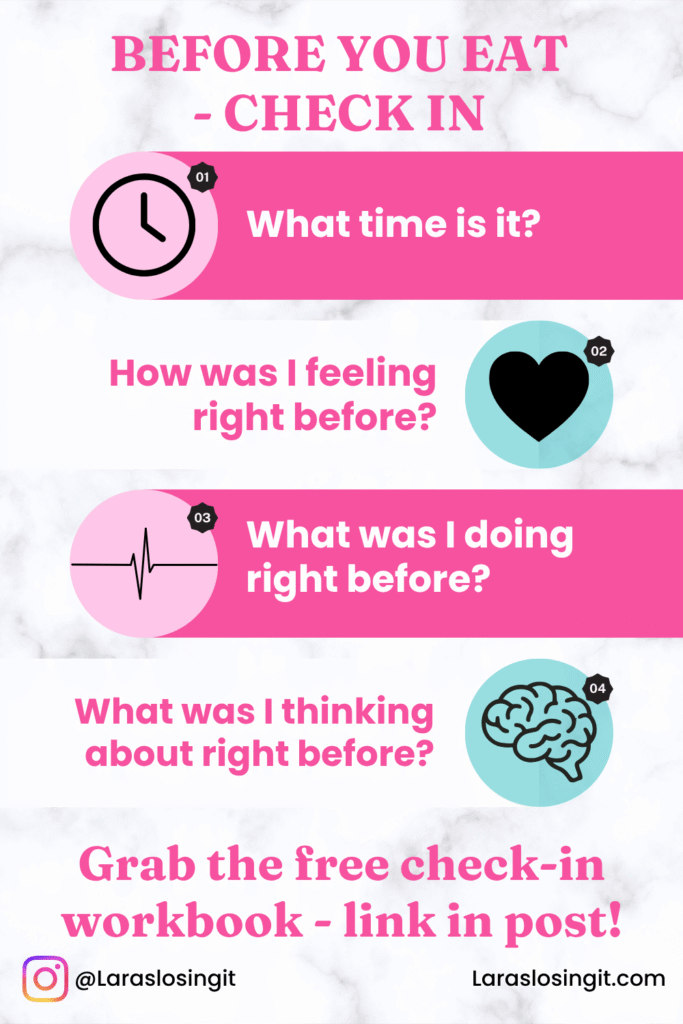
Quick answer: Start by journaling the moments you turn to food for reasons other than hunger, the time, how you were feeling, what you were doing, and what you were thinking about right before.
The first step is to begin recognizing the common times you turn to food for reasons other than hunger. This might not even always be tied to a specific emotion, it can be pretty habitual too. Either way, the best way to catch it is to journal.
Note things like:
- What time it is
- How you were feeling right before
- What you were doing right before
- What you were thinking about right before
When I first did this myself, I found I was eating as a form of procrastination a lot more than I expected!
What to Do Once You See the Pattern
Quick answer: Once you can see your patterns clearly, you can start facing what’s underneath them directly, whether that’s stress, grief, or something else, instead of reaching for food or a distraction every time it comes up.
Once you’re able to see the patterns, you can start to tackle them. If there’s a big stress in your life that you notice you turn to food around every time you start thinking about it, maybe it’s time to actually face that thing head on.
If you’ve recently gone through a loss and you’re just feeling sad from that, allow yourself to sit in that feeling without turning on the TV or grabbing food. Meditate, journal, allow yourself to actually feel the emotions and process them. It’s uncomfy AF, but if you don’t deal with them, they will keep coming back up.. Ruthlessly!
This is exactly the kind of pattern work I do with coaching clients, helping you tell the difference between genuine hunger, a nervous system that’s overwhelmed, and everything in between.
I also have a free Emotional Eating Check-In Workbook to help walk you through this exact process, a simple, judgment-free way to start noticing what’s actually driving it, before you’re on autopilot reaching for food. Download the free guide here and let me know how it goes!
Not sure which pattern is even driving your eating in the first place? My free 2-minute quiz, What’s REALLY Keeping You From Food Freedom?, can help you find your starting point.
FAQ: Emotional Eating Without Dieting
Not on its own. Emotional eating is a normal coping behavior most people use sometimes. It becomes worth closer attention if it’s your main or only coping tool, if it’s happening very frequently, or if it’s tipping into a loss-of-control binge, which is often a sign of restriction elsewhere, not a character flaw.
You don’t have to stop it entirely, the goal is to understand it, not eliminate it. Start by journaling the moments you reach for food outside of hunger, look for patterns, and build in other ways (rest, processing the emotion directly, talking it through) so food isn’t the only tool available.
Yes! Even people fully practicing intuitive eating still emotionally eat sometimes, it’s a normal, human way to cope, not a sign you’re doing intuitive eating “wrong.”
Emotional eating is reaching for food to cope with a feeling. Binge eating adds a loss-of-control element, feeling like you can’t stop. That loss-of-control feeling is usually driven by restriction happening somewhere else, not by the emotion itself.
Want more real talk on ditching diet culture for good? Come follow along on Instagram @laraslosingit!